Adorable Flexi Kitsune STL: Easy 3D Printing for a Playful Desk Decoration
The Adorable Flexi Kitsune STL is a digital 3D model designed to bring the charm of Japanese folklore into your workspace or home with minimal effort. Inspired by the traditional kitsune, which are fox spirits known for their intelligence and magical abilities in Japanese mythology, this model adds a modern twist with its flexible tail that moves smoothly out of the box. The design is optimized for FDM 3D printing and is especially suitable for beginners who want to create something functional and aesthetically pleasing without complex assembly.
Understanding the Design and Purpose
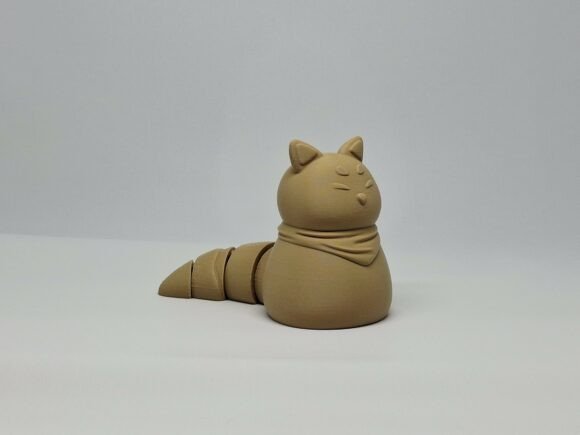
This 3D model is more than just a decorative piece—it’s an example of how thoughtful design can enhance user experience in additive manufacturing. The Flexi Kitsune STL features a stylized body with rounded edges and balanced proportions, making it both visually appealing and structurally sound for 3D printing. The standout feature is the articulated tail, which is created using flexible segments that allow natural movement once printed. This eliminates the need for additional parts, glue, or manual assembly, streamlining the production process significantly.
With dimensions of X 5.4 cm, Y 10 cm, and Z 7.1 cm, the model is compact enough to serve as a desk toy or shelf decoration but large enough to make a visual impact. Its simplicity makes it ideal for those who want to add a personal touch to their space without diving into advanced modeling techniques.
Where It Fits Into Your Workflow
When planning a creative project or designing for a specific use case, choosing the right 3D model can make all the difference. The Adorable Flexi Kitsune STL fits naturally into several stages of a workflow:
- Pre-Project Planning: Use it to test printer calibration or filament performance before starting larger projects.
- Durational Use: Incorporate it into your daily routine as a fidget figure or motivational object while working on tasks.
- Post-Production Display: After completing a major 3D print, place the kitsune on your desk as a reminder of progress or success.
For educators and hobbyists, the model can be part of a lesson plan or workshop focusing on print-in-place designs, articulation, and cultural representation in 3D printing. For entrepreneurs and marketers, it offers a unique product idea for niche markets such as anime enthusiasts or collectors of yokai figures.
How to Prepare for Printing
Before beginning the print process, ensure you have the necessary tools and knowledge in place. Here’s what you’ll need:
- A compatible FDM 3D printer (most standard models will work).
- PLA, silk PLA, or matte PLA filament—these materials offer good flexibility and finish for the tail.
- A slicer software like Cura, PrusaSlicer, or Simplify3D to prepare the G-code.
- An understanding of basic printing settings, particularly layer height and infill density.
Since the model is designed as a print-in-place creation, no supports are required at the default scale. However, if you decide to scale the model up for a larger display, consider enabling support structures depending on your printer's capabilities. A recommended layer height of 0.2 mm ensures a smooth finish while keeping print time reasonable.
Integrating Into Your Creative Process
One of the key advantages of the Adorable Flexi Kitsune STL is its adaptability. You can integrate it into various aspects of your creative or professional life:
- As a desk companion during brainstorming sessions or long work hours.
- In a product development pipeline to showcase design flexibility and aesthetic appeal.
- Within branding or packaging concepts as a custom gift item or promotional tool.
- As a teaching aid for explaining articulation and motion in 3D-printed objects.
For instance, a small business owner might include these kitsunes in starter kits for new customers interested in 3D printing. A blogger could feature one as a post topic to engage readers with DIY culture and folklore themes. Educators may use it in classroom demonstrations to illustrate how mechanical joints can be integrated into organic shapes without requiring external components.
Practical Implementation Tips
To achieve the best results when printing the Flexi Kitsune STL, keep the following tips in mind:
- Print at the default scale first to evaluate the model's flexibility and structural integrity.
- Monitor the tail segments during printing to ensure they remain intact and properly connected.
- Use a stable bed adhesion method like a brim or raft to prevent warping, especially if printing with higher infill.
- Post-processing is optional but can include sanding rough edges or applying paint for added detail.
- If printing multiple copies, adjust the layout in your slicer to optimize build plate usage and reduce waste.
Also, because resizing is allowed, consider scaling the model down for mini collections or up for statement pieces. Just remember that increasing size may affect the tail’s flexibility, so some experimentation with materials or printer settings might be needed.
Compatibility and Usability
The Adorable Flexi Kitsune STL is compatible with most slicing software and printers that support standard .STL files. When importing the file, double-check the orientation and scale within your slicer to avoid any misalignment issues. Since the model is designed for ease of use, it doesn’t require special plugins or modifications, which makes it accessible even to those with limited technical experience.
Its usability extends beyond the initial print. Once completed, the model can be used in a variety of ways:
- As a conversation starter in office environments or at events.
- For personal motivation, placing it near your workspace to symbolize creativity and perseverance.
- As a collectible item for fans of mythical creatures or Japanese pop culture.
The model also serves as a benchmark for testing different filaments and printer settings, helping users improve their overall 3D printing skills through hands-on experience.
Long-Term Use and Quality Control
While the model is primarily a desktop decoration, its durability and quality depend on proper printing and handling. To maintain its functionality over time:
- Ensure the printer is well-calibrated and the nozzle height is accurate.
- Use high-quality filament to avoid brittleness or warping.
- Store the finished model in a dry place to preserve the tail’s flexibility.
- Handle the tail gently to prevent snapping or deformation from excessive force.
By following these guidelines, the model can last for years as a cherished addition to your collection or workspace. It’s a great way to introduce consistency into your printing process, especially if you're experimenting with new materials or settings.
Real-World Examples of Use
Here are a few scenarios where the Adorable Flexi Kitsune STL has been successfully integrated into workflows:
- Office Environment: A team of developers uses a row of printed kitsunes to decorate their workspace, fostering a relaxed and playful atmosphere.
- Workshop Teaching: An educator demonstrates how to print the model in a single piece, then discusses the mechanics behind the flexible tail as a learning point.
- Personal Project: A hobbyist prints a kitsune to commemorate the completion of their first full 3D printing course, serving as both a trophy and a useful desk toy.
- Marketing Campaign: A startup includes a printed kitsune in a customer welcome kit, highlighting their commitment to innovative design and customer experience.
Each use case shows how the model adapts to different contexts while maintaining its core purpose: to be a cute, functional, and easy-to-print representation of a classic mythological figure.
Conclusion
The Adorable Flexi Kitsune STL is a testament to how thoughtful design can simplify 3D printing while still delivering expressive and engaging results. Whether you’re a beginner looking to gain confidence in printing or an experienced creator aiming to add a whimsical element to your portfolio, this model provides a reliable and rewarding challenge.
By understanding its structure, preparing your equipment correctly, and integrating it thoughtfully into your workflow, you can make the most of this versatile STL file. Its flexibility, both in design and application, makes it a valuable asset for anyone interested in combining art, culture, and technology in a practical way.